
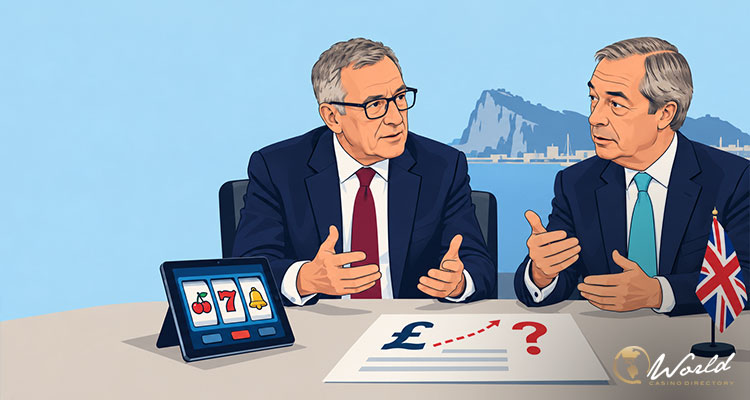
“With the UK Budget approaching, I have been engaging with various political factions to ensure they fully grasp the potential consequences that further increases to gambling taxes could have on Gibraltar. It is my responsibility to ensure that Gibraltar’s interests are represented and that our voice is heard clearly across the political spectrum.”
The issue of levies on gaming machines remains a critical concern.
The industry is particularly focused on the possibility of another hike in the tax rate applied to gaming machines.
Earlier speculation suggested that the current 20% rate could double to 40%, though more recent projections point to a more modest increase, potentially to 25%.
Higher rates would impact betting shops, adult gaming centers, and bingo halls across the UK. Industry insiders warn that any further rise in operating costs could lead to job losses and the closure of venues.
Gibraltar is significantly affected by these decisions, as several major gambling companies with UK operations—including Entain, bet365, evoke, Kindred Group, and LiveScore Group—also maintain a presence in the territory.
Feetham has previously noted that if operators respond to UK tax hikes by cutting staff or reducing other local expenditures, the total amount these companies ultimately pay in Gibraltar could decline.
“An increase in UK taxes raises costs for gambling firms in Gibraltar, which in turn reduces the corporate income tax they end up paying here. If companies look to offset these costs through layoffs, it will directly impact revenue from payroll taxes.”
According to Feetham, the online gambling and gaming sector accounts for approximately 30% of Gibraltar’s GDP, contributes nearly one-third of its tax revenue, and provides over 3,400 jobs.
Concerns regarding employment have been further fueled by the fact that Flutter—which has already faced tax increases—has announced plans to cut 1,400 jobs across the UK, Ireland, and continental Europe.
Political support remains divided.
Nigel Farage has publicly opposed further increases to gambling taxes, warning of the negative impact such measures would have on brick-and-mortar betting operators. “Regarding the high street, one of the things that has managed to survive is the betting shop—in fact, for many lonely individuals, these shops serve as places where they can go and connect with others,” Farachi remarked in November 2025.
“In this country, 22 million people engage in some form of gambling every week. Yes, there are issues with problem gambling—just as there are issues with alcohol, drugs, and a whole range of other problems.”
Within the Labour Party, some remain staunch advocates for tax increases. A group of 90 Labour backbenchers, led by MP Alex Ballinger, has called for the tax on machine-based gaming to be raised to 40%.
Labour MP Gareth Snell took a different stance at a ‘Gaming Breakfast’ event—which was also attended by Conservative MPs Wendy Morton and Andrew Rosindell—stating:
“I encourage you all to use your voices and your influence to proudly champion the benefits of this industry. We should not be shy about the economic output, the jobs, and the tax revenue it generates. I support you—but please, make your voices heard more loudly.”
Gibraltar Awaits Budget Decision
Feetham argues that increasing gambling taxes could stifle investment and job creation, while also driving some customers toward unregulated operators.
His recent meetings are part of an ongoing campaign that began before last year’s hike in the Remote Gaming Duty.
The budget announcement on October 28 will reveal whether the government intends to raise taxes on machine-based gaming again—and, if so, by how much.
This decision is critical for Gibraltar, which hosts a substantial gambling sector with deep ties to operators serving the UK market. Consequently, Feetham’s lobbying efforts have focused on ensuring that these cross-border implications are taken into account before any new tax measures are finalized. Nigel Feetham, Gibraltar’s Minister for Justice, Trade and Industry, has stepped up lobbying efforts in the UK ahead of the October 28 budget announcement, warning that any further increases to gambling taxes could negatively impact gaming companies operating in Gibraltar, as well as local employment and tax revenues.
According to the Gibraltar Broadcasting Corporation (GBC), Feetham met with Reform UK leader Nigel Farage, Robert Jenrick, and Member of Parliament Andrew Rosindell—a move intended to raise issues concerning the gaming sector across the broader political spectrum. Earlier this week, he also hosted a “gaming breakfast” in London, which was attended by various industry executives and politicians from several different political parties.


Comments